
Tariffs are a little outside our wheelhouse, but last week’s Supreme Court decision striking down the IEEPA tariffs has broader implications for the tax policy landscape. Here are some thoughts.
First, as we noted the last time tariffs were on the front page, striking down the IEEPA tariffs doesn’t really change the landscape for the next few years. As Bruce Mehlman posted over the weekend, the President has many options when it comes to tariffs, and has made clear he plans to use them:

Second, the decision is unlikely to affect revenue collections. Secretary Bessent made clear the Administration plans to continue tariffs under different authorities, resulting in “virtually unchanged tariff revenue for 2026.”
Third, revenues might be steady, but the rates paid by specific industries and countries will likely change. As noted by The Budget Lab, effective tariff rates will drop from around 14 percent to 8 percent under the court decision, but that’s before any replacement tariffs are imposed. So Brazil is no longer looking at 40-percent, country-specific rates under IEEPA, but its exports will likely be hit with the 10-15 percent replacement tariffs Trump referenced last week:
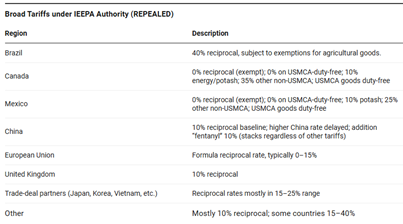
Fourth, it’s unclear whether the struck-down tariffs – amounting to about $130 billion – will need to be refunded, or exactly how that would work. Our helpful Search Assist informed us that “Yes, the Supreme Court’s ruling suggests that the tariffs may need to be refunded, but the process for obtaining those refunds is expected to be lengthy and complicated. Importers will likely have to navigate through various legal channels to recover the funds.” Sounds about right.
Fifth, there’s talk the court ruling may encourage Congress to take up another big tax bill this year. Congressional leaders have been contemplating a package for months and some observers suggest the ongoing tariff drama may increase the chances they move forward. That seems unlikely. There’s no consensus on whether a second tax bill is advisable and there’s simply no agreement on what a legislated tariff fix would look like. Congress might do a tax bill, but it won’t be driven by tariffs.
So the more things change, the more they stay the same. Some level of increased tariffs will continue, despite the court decision. Those steady-state tariffs are nowhere near the levels of the original “reciprocal” tariffs and their ultimate cost needs to be netted out by whatever progress the Administration makes in trade negotiations and other initiatives. Meanwhile, Congress may take up a tax bill later this year but, unless something dramatic happens, using it as a vehicle to resolve the tariff question is highly unlikely.